

Starting therapy can feel like a big step for kids and teens. Even when they know they need support, talking about feelings, navigating difficult experiences or opening up to a new person can feel uncomfortable.
Sometimes, having a friendly face nearby makes all the difference. And sometimes, that friendly face happens to have four paws and a wagging tail!
But what exactly does a therapy dog do during a counseling session? Can a dog really help with anxiety, feelings, emotion regulation? And what does research say about the benefits of having a dog involved in therapy?
Let’s take a closer look!
What is a therapy dog, and what does a facility dog do?
You may have heard the terms therapy dog, facility dog and service dog used interchangeably. While they can sound similar, there are some important differences.
A therapy dog generally provides comfort and positive interactions in settings such as hospitals, schools and care facilities. A facility dog is specially trained to work alongside a professional in a setting such as a counseling office, helping support the work being done with individuals or groups.
A service dog, on the other hand, is trained to perform specific tasks for an individual with a disability.
For example, my dog, Judah, is a certified facility dog through KSDS Assistance Dogs, Inc., an organization accredited by Assistance Dogs International (ADI). Facility dogs receive specialized training to work with professionals and interact appropriately with different people and environments.
This means Judah is more than a sweet dog who happens to be in the office. She is a trained partner who can be incorporated into a therapeutic setting in thoughtful, purposeful ways.
Interested in certification and standards? Learn more about KSDS facility dogs and Assistance Dogs International.
Why can a dog help a child feel more comfortable in therapy?
For some children, talking to an adult about worries, family changes, friendship struggles or difficult experiences can feel intimidating. They may not know where to start, or they may worry about saying the wrong thing.
A dog can help make the environment feel a little less intimidating.
Here are a few reasons a facility dog may be helpful during counseling:
1. Dogs can help create a sense of safety
Children often communicate more easily when they feel safe, accepted and supported. A calm, friendly dog can help make a counseling office feel more welcoming and less clinical.
A child may initially feel nervous about meeting a counselor but become more comfortable when there is a dog nearby. That sense of comfort can help create an environment where the child feels more willing to participate.
2. Dogs can offer comfort without requiring words
Sometimes, kids have feelings they aren't ready to talk about. They may feel sad, anxious, frustrated or overwhelmed without knowing how to explain what is happening inside.
A child might find comfort in sitting near a dog, gently petting her or simply knowing she is there.
There is no pressure to explain everything or find the right words. That can be especially helpful for children who struggle to communicate their feelings verbally.
3. Dogs can help take some of the pressure off
Have you ever noticed how much easier a conversation can feel when you're doing something together instead of sitting face-to-face?
For some kids, having a dog present can make conversation feel more natural. Instead of feeling like all the attention is on them, they can interact with the dog while talking with their counselor.
This can be especially helpful for children who are shy, hesitant to open up or uncomfortable being the center of attention.
4. Dogs can help build connections
Building trust with a counselor takes time. A facility dog can offer a shared point of connection that helps a child begin to feel more comfortable in the counseling relationship.
For example, a child might start by talking about the dog's favorite toys, asking questions about her or playing a simple game. Those small interactions can create opportunities for conversation and connection.
And sometimes, those small moments are where meaningful therapeutic work begins.
Can therapy dogs help children with anxiety?
Anxiety can look different from one child to another.
Some kids worry constantly about school, friendships or making mistakes. Others experience physical symptoms such as stomachaches, restlessness or difficulty settling down. Some children become quiet and withdrawn, while others appear irritable or have big emotional reactions.
A facility dog may help some children feel calmer and more comfortable during a counseling session. Having a dog nearby can offer a soothing experience and make it easier to participate in activities or conversations that might otherwise feel overwhelming.
A dog may also create opportunities for children to practice coping skills in a supportive environment.
For example, a counselor might help a child:
Notice what their body feels like when they are anxious
Practice slowing down and taking calming breaths
Identify feelings and talk about what triggered them
Build confidence in an unfamiliar situation
Practice expressing needs and asking for help
The goal isn't to make anxiety disappear simply by introducing a dog. Instead, the dog can be one part of a larger therapeutic approach that helps children understand their emotions and develop skills they can use outside the counseling office.
What does research say about therapy dogs and children's mental health?
Research into animal-assisted interventions has grown over the years, and findings suggest that interactions with dogs may offer meaningful benefits for some children and teens. However, it is important to understand what the research does and does not tell us.
Here are a few helpful findings.
Research on anxiety in children and adolescents
A systematic review published in 2024 examined animal-assisted therapy for anxiety in children and adolescents. The researchers identified seven eligible studies involving dogs.
Most of the studies reported findings suggesting that animal-assisted interventions may help reduce anxiety. However, the authors also emphasized that relatively few studies have examined this specific question, so more research is needed.
This is encouraging for children who find it difficult to feel comfortable in traditional therapeutic settings, but it does not mean every child will experience the same benefits.
Read the systematic review on animal-assisted therapy and anxiety in children and adolescents.
Research on mental health and behavioral outcomes
A systematic review published in 2024 and indexed in 2025 examined randomized controlled trials of dog-assisted interventions for children and adults with mental health or neurodevelopmental conditions.
The review included 29 randomized controlled trials. Among the studies reporting each outcome, some found positive effects on social skills and behavior, symptom severity, depression and agitation.
The results were not consistently positive across all studies, and the researchers noted limitations in the quality and reporting of the evidence.
In other words, dog-assisted interventions show promise, particularly for certain social and behavioral goals, but they are not a guaranteed solution for every mental health concern.
You can read the systematic review of dog-assisted interventions.
Research on children with behavioral and developmental disorders
A 2022 systematic review examined 14 studies of dog-assisted therapy involving children with behavioral and developmental disorders. Six studies reported significant outcomes, with findings particularly noted in social and psychological areas.
The researchers also identified limitations in study quality, highlighting the need for stronger research.
These findings suggest that incorporating a dog into a therapeutic intervention may be useful for some children, although results depend on the child, the intervention and the goals being addressed.
Read the systematic review of dog-assisted therapy in children with behavioral and developmental disorders.
What should parents take away from the research?
The evidence is promising, but it is still developing. Research findings support considering dog-assisted interventions as a potential complement to other therapeutic approaches rather than a replacement for counseling.
Every child is different. A facility dog may be especially helpful for one child and less meaningful for another. The important thing is finding an approach that supports your child's individual needs.
What might a therapy dog do during a counseling session?
You might be wondering what this actually looks like in practice. Does the dog sit beside the child the entire time? Does the child spend the session playing with the dog?
The answer depends on the child, the session and the goals being addressed.
A facility dog can be incorporated into counseling in several ways.
Providing comfort during difficult conversations
A child who feels nervous discussing a difficult experience may appreciate having a dog nearby. The dog can offer a comforting presence while the counselor helps the child work through their feelings.
Supporting play-based activities
Play is a natural way for children to explore emotions, relationships and experiences. A facility dog may be included in appropriate activities that encourage communication, creativity and engagement.
Practicing emotional regulation
A counselor might help a child notice feelings of frustration or anxiety, recognize physical cues and practice coping strategies. Interacting calmly with a dog may provide an opportunity to slow down and practice those skills.
Building confidence and communication skills
A child may practice giving appropriate directions, asking for help or communicating boundaries during structured interactions with a dog.
These experiences can create opportunities to develop confidence, patience and social skills.
Making room for connection and fun
Therapy does not always have to look like sitting in a chair and answering questions. Sometimes, a little laughter, a game of fetch or a shared moment with a dog can help a child feel more comfortable and connected.
Those moments can be meaningful, too.
Is a therapy dog right for every child?
While facility dogs can be helpful for some children, they’re not necessarily a fit for everyone.
Some children are afraid of dogs. Others may have allergies, sensory sensitivities or personal preferences that make interacting with an animal uncomfortable. And that’s totally fine. Therapy dogs only come to sessions where therapists and clients (or parents) have agreed first.
A facility dog should never be forced on a child or treated as something they must interact with to participate in counseling. Children should have a choice about whether and how they interact with the dog.
For some kids, that might mean petting the dog or playing fetch. For others, it might mean simply having the dog in the room. And for some, the best option may be to work with the counselor without the dog present.
The purpose is to support the child, not add another source of stress.
Meet Judah, our certified therapy dog
Judah is a sweet, friendly dog who loves children, offering comfort and playing fetch. As a certified KSDS facility dog, she has specialized training to support her work alongside a professional in a therapeutic setting.Judah can help make our counseling space feel welcoming and give children another opportunity to experience connection and comfort as they work through life's challenges.
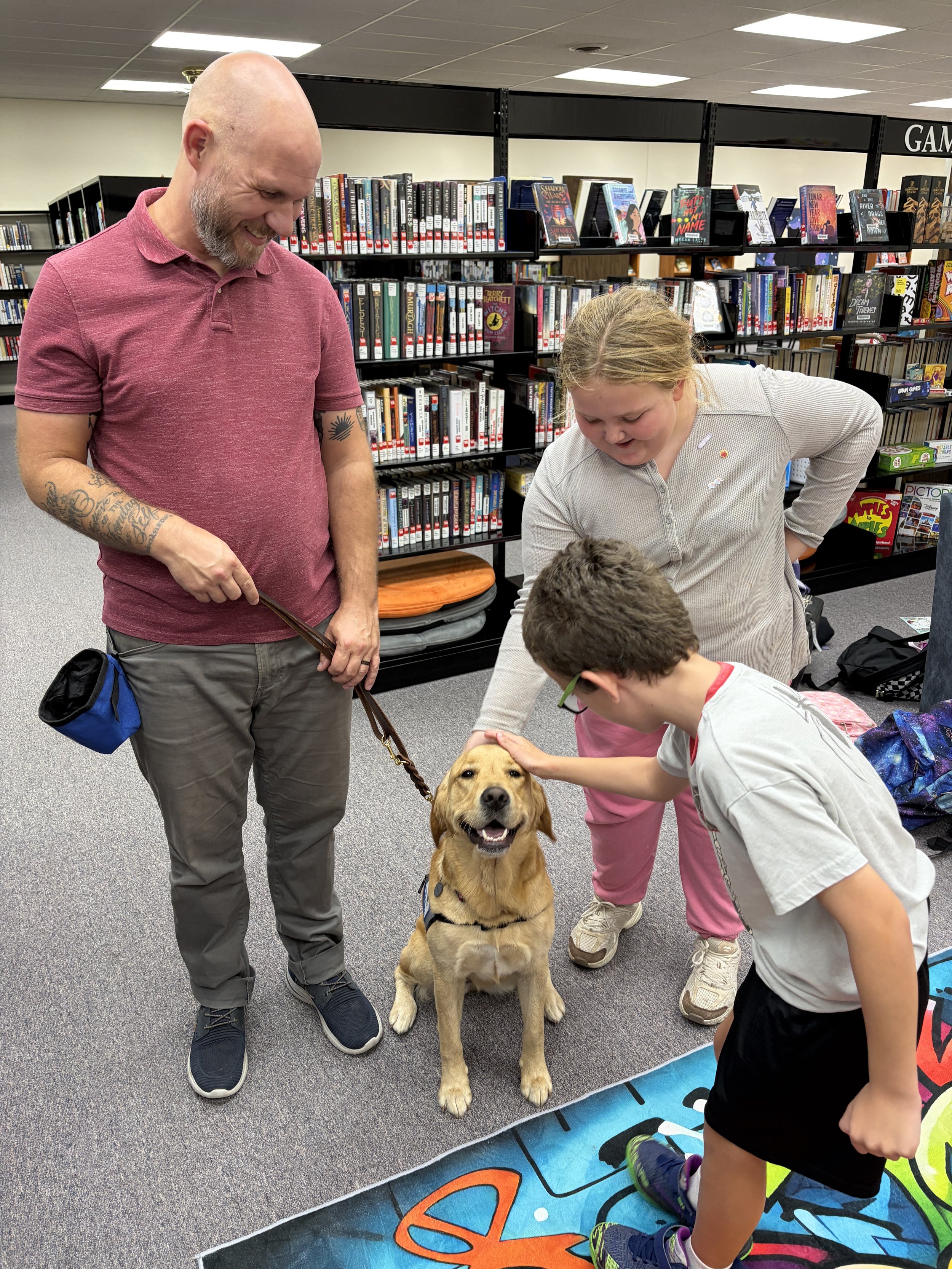
Whether a child is navigating anxiety, struggling with big emotions, adjusting to changes at home or school or simply learning more about themselves, our goal is to help them feel supported as they build the skills they need to thrive.
And sometimes, having a friendly dog nearby can make taking that next step feel a little easier.
Think being in the room with a therapy dog may be helpful for your kiddo?
If your child is struggling with anxiety, emotional regulation, friendships, family changes or other challenges, counseling can provide a safe space to explore those concerns and develop helpful coping skills.
If you have questions about counseling or would like to learn more about my approach, including Judah's role in a session with your child, I’d love to connect with you.
AS ALWAYS, YOU CAN REACH OUT TO ME FOR HELP, QUESTIONS OR TO SET UP A TIME TO TALK.